
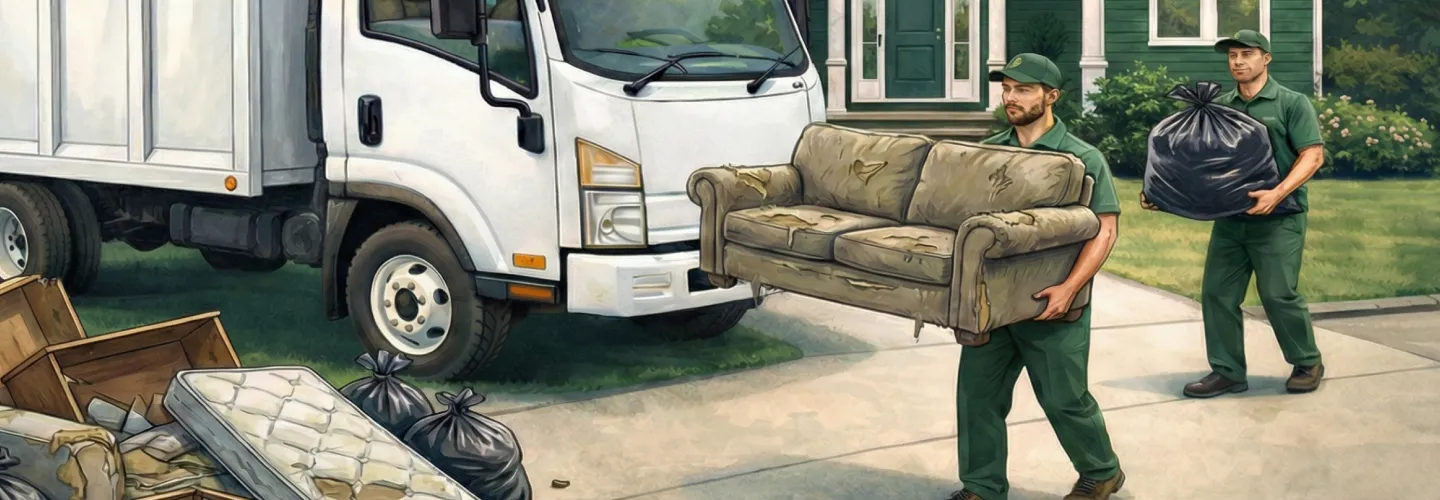
Fairburn Construction Waste Management Services
Choose us for your construction waste management needs and experience hassle-free, eco-friendly disposal with prompt service and transparent pricing—ensuring your project stays clean, compliant, and on schedule.
Get a Free QuoteOur Fairburn Junk Removal Services
Construction Waste Management in Fairburn, GA – Local Service Guide
Construction waste management in Fairburn, GA, requires a tailored approach for both residential and commercial needs. In neighborhoods like Cedar Grove and South Wind, residents often need to dispose of bulky items such as furniture, mattresses, and appliances during seasonal cleanouts, home renovations, or after major life events. Local weather and property access—especially in areas with dense tree coverage or frequent storms—can impact logistics and timing. For residential spaces like garages, basements, and yards, spring and fall cleanups are common, while trash pickup schedules and yard waste cycles vary by neighborhood. Commercial properties in Fairburn’s downtown and industrial corridors face unique challenges, from high-volume construction debris to discreet office cleanouts, often requiring coordination with property managers and adherence to local regulations. Specialty services, such as dumpster rentals or estate cleanouts, are frequently needed for foreclosures, hoarding situations, or major renovations, demanding careful planning and compliance with city guidelines. For more information on local rules and resources, visit the Fairburn Public Works Department.
Key Considerations for Construction Waste Management in Fairburn
- Timing cleanouts around local weather and neighborhood schedules
- Securing necessary permits for large-scale disposal or dumpsters
- Using approved disposal and recycling channels
- Ensuring property access for removal vehicles, especially in tight or wooded areas
- Estimating waste volume for proper container sizing
- Coordinating with city services for category-specific items and compliance
Benefits of Construction Waste Management in Fairburn
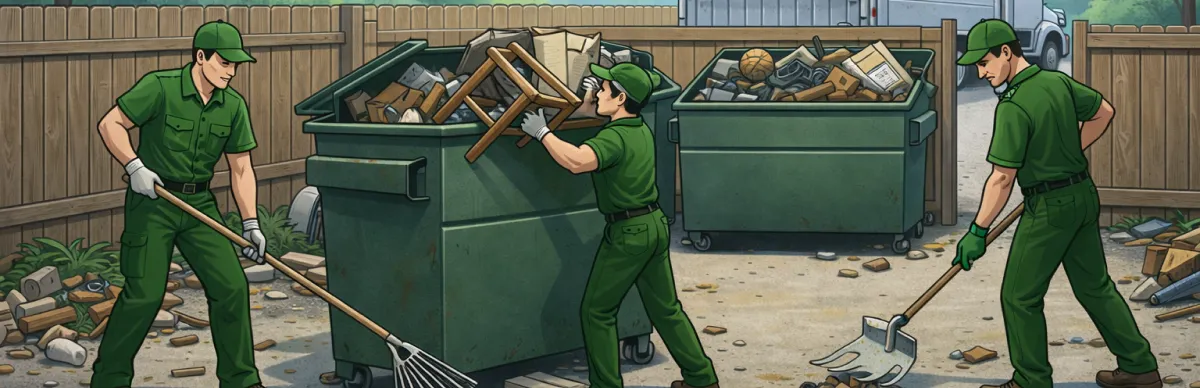
Efficient Waste Removal
Cost-Effective Solutions
Eco-Friendly Disposal
Regulatory Compliance
Improved Site Safety
Streamlined Project Timelines
Coordinating Construction Debris Disposal with Fairburn's Public Works Department
Construction and demolition (C&D) waste generated within Fairburn must be managed in accordance with municipal sanitation requirements overseen by the city's Public Works Department. This department administers infrastructure services including sanitation, stormwater management, and waste-related coordination for residential and commercial projects. Contractors and property owners undertaking renovation, demolition, or new construction should confirm disposal procedures before project commencement. Key considerations include:
- Material classification: C&D waste includes lumber, drywall, roofing shingles, concrete, brick, metal, and mixed debris
- Prohibited curbside disposal: Construction debris is generally not accepted through standard residential trash collection
- Hauler coordination: Licensed waste haulers must transport C&D materials to permitted disposal or recycling facilities
- Stormwater protection: Debris must be contained on-site to prevent runoff into storm drains and waterways managed by the Fairburn Water Division
Fairburn Public Works Department
56 Malone Street, Fairburn, GA 30213
Phone: (770) 964-2244
Official Website: Fairburn Public Works Department
Fairburn Building Permits and Code Compliance for Construction Waste Projects
Any construction, renovation, or demolition project in Fairburn that generates significant waste typically requires building permits issued through the city's Building Division. Permit applications undergo plan review and inspection to ensure compliance with local building codes and waste management obligations. Demolition permits in particular may carry specific debris removal timelines and site restoration requirements. Residents and contractors should be aware of the following:
- Permit applications: Submit through the Fairburn Building Division prior to beginning work
- Inspection requirements: Construction sites are subject to periodic inspections to verify proper debris containment and disposal
- Site maintenance: Accumulated waste must not create health hazards, obstruct public rights-of-way, or violate property maintenance standards
- Code enforcement: The Fairburn Code Enforcement division investigates complaints related to improper debris storage, illegal dumping, and failure to maintain construction sites
- Violation penalties: Non-compliance with debris management requirements may result in citations, stop-work orders, or fines
Fairburn Building Division
56 Malone Street, Fairburn, GA 30213
Phone: (770) 964-2244
Official Website: Fairburn Building Division
Georgia's Solid Waste Management Act and Construction Debris Regulations
Construction waste disposal in Fairburn is governed at the state level by the Georgia Comprehensive Solid Waste Management Act (O.C.G.A. § 12-8-20) administered by the Georgia Environmental Protection Division (GA EPD). This legislation establishes permitting requirements for landfills and transfer stations, sets standards for C&D waste processing facilities, and mandates proper handling of regulated materials. Contractors and haulers operating in Fairburn must comply with the following state-level requirements:
- Permitted facilities: C&D waste must be delivered to GA EPD-permitted landfills, inert waste landfills, or recycling facilities
- Inert waste classification: Clean concrete, brick, block, and asphalt may qualify for disposal at inert waste landfills, which have less restrictive permitting
- Hazardous material exclusion: Asbestos-containing materials, lead-based paint debris, and chemical-contaminated soils require separate handling under hazardous waste regulations
- Illegal dumping prohibition: Disposing of construction debris on vacant lots, roadsides, or waterways carries penalties including fines up to $25,000 per day under Georgia law
- Manifest and tracking: Commercial haulers must maintain records of waste origin, volume, and destination facility
Material Sorting and Recycling Requirements for Fairburn Construction Sites
Effective construction waste management in Fairburn requires on-site sorting and separation of recyclable materials from general debris. While Georgia does not currently mandate a specific C&D waste diversion rate, the Georgia Environmental Protection Division encourages recycling of recoverable construction materials to reduce landfill burden. The EPA's Resource Conservation and Recovery Act (RCRA) also provides the federal framework for solid waste management that influences state and local practices. Contractors should implement the following sorting practices:
- Metals: Scrap steel, copper, aluminum, and iron should be separated for recycling at scrap metal facilities
- Concrete and masonry: Clean concrete, brick, and block can be crushed and reused as aggregate or fill material
- Wood: Untreated lumber may be recycled or repurposed; treated wood requires disposal at permitted facilities due to chemical content
- Roofing shingles: Asphalt shingles are accepted at select recycling facilities for processing into road paving material
- Drywall: Gypsum wallboard can be recycled at specialized facilities; contaminated or painted drywall may face restrictions
- Cardboard and packaging: Clean cardboard from material deliveries should be separated for standard recycling
Safety and Hazardous Material Handling on Fairburn Construction Sites
Construction waste management in Fairburn must account for hazardous materials commonly encountered during renovation and demolition of older structures. Buildings constructed before 1978 may contain lead-based paint, and structures built before 1980 may include asbestos-containing materials in insulation, floor tiles, or pipe wrapping. Federal and state regulations impose strict handling requirements for these materials. Key safety and compliance obligations include:
- Asbestos surveys: Georgia requires asbestos inspections by licensed professionals before demolition of commercial structures; residential projects should also assess risk
- Lead-safe work practices: The EPA Renovation, Repair, and Painting Rule requires certified renovators when disturbing lead paint in pre-1978 housing
- OSHA compliance: Workers handling construction debris must follow OSHA standards for personal protective equipment, fall protection, and heavy lifting protocols
- Appliance refrigerants: Any appliances removed during construction must have refrigerants recovered by EPA Section 608-certified technicians before disposal
- Household hazardous waste: Paint, solvents, adhesives, and chemical products found during renovation cannot be mixed with C&D debris and must be disposed of through Fulton County's Household Hazardous Waste collection programs
Fairburn Fire Department
56 Malone Street, Fairburn, GA 30213
Phone: (770) 964-2244
Official Website: Fairburn Fire Department
What Neighborhoods Do We Serve Throughout Fairburn, GA?
- Downtown Fairburn: The historic commercial core features older structures that may contain asbestos or lead-based paint, requiring pre-demolition surveys. Narrow streets and on-street parking can limit access for large waste hauling vehicles, necessitating advance coordination with city departments.
- Camp Creek Marketplace Area: This commercial corridor generates significant construction and tenant improvement debris. Projects in this zone should coordinate with the Fairburn Planning & Zoning Commission regarding commercial waste management requirements and site plan compliance.
- Duncan Memorial Park Vicinity: Residential neighborhoods near the park feature single-family homes with driveway access suitable for debris loading. Proximity to green spaces requires careful stormwater runoff prevention during construction projects.
- Bohannon Road Corridor: Newer residential subdivisions with wider streets and cul-de-sacs provide easier access for construction waste vehicles. HOA covenants in some communities may impose restrictions on debris staging duration and placement locations.
- Campbellton-Fairburn Road Area: A mix of residential and light commercial properties undergoing redevelopment generates varied C&D waste streams. Older homes in this area may require hazardous material assessments before renovation debris removal.
- South Fulton Industrial Area: Warehouse and industrial properties produce large volumes of construction waste including metal, concrete, and commercial fixtures. Commercial hauler licensing and proper waste manifesting are essential for projects in this zone.