
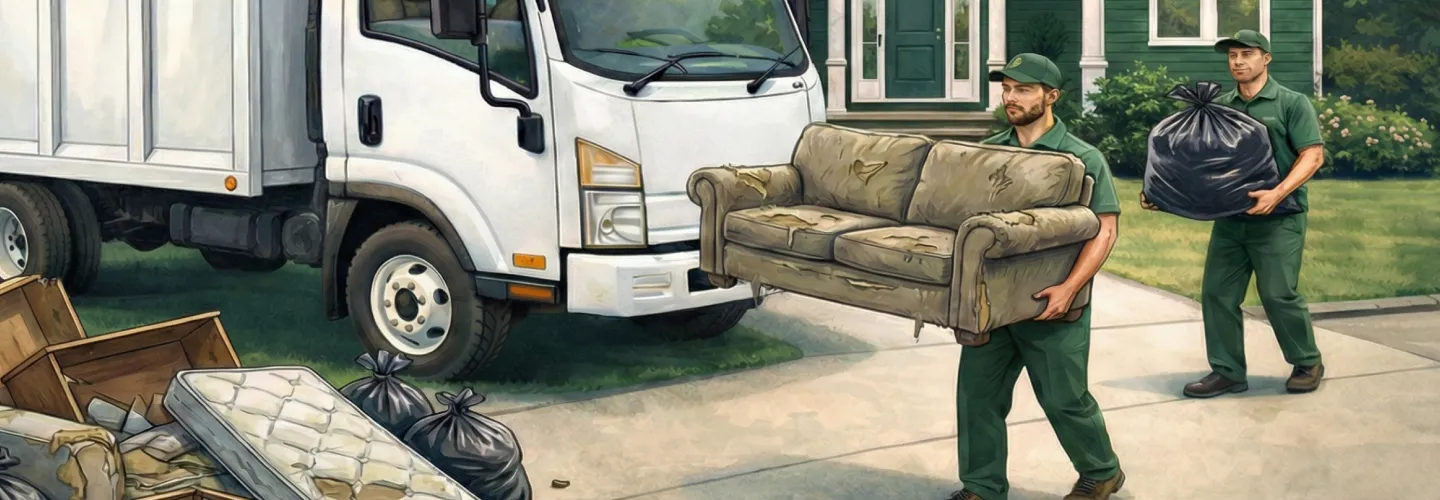
Fairburn Hoarding Cleanup Services
Choose our Hoarding Cleanup for discreet, respectful service that restores safety, comfort, and peace of mind to your home—handled by experienced professionals who truly care.
Get a Free QuoteOur Fairburn Junk Removal Services
Hoarding Cleanup in Fairburn, GA – Local Service Guide
Hoarding cleanup in Fairburn, GA requires a sensitive, strategic approach tailored to local needs. In neighborhoods like Cedar Grove and South Wind, residents often face hoarding challenges triggered by life transitions, seasonal cleanouts, or property sales. For residential items such as furniture, mattresses, and appliances, timing often aligns with spring cleaning, estate transitions, or after major weather events. Local options include donation, recycling, or city-approved disposal, with logistics shaped by property access and weather conditions. Residential spaces—garages, basements, and yards—see increased cleanup needs after storms or during annual yard waste cycles, especially in flood-prone or tree-heavy areas. Commercial properties in Fairburn’s downtown and industrial corridors require discreet, timely service to minimize business disruption, with volume and operational needs varying by sector. Specialty cleanups, including hoarding, foreclosures, and estate situations, demand careful planning, coordination with property managers, and adherence to local regulations. For guidance on local rules and resources, visit the Fairburn Public Works Department.
Key Considerations for Hoarding Cleanup in Fairburn
- Timing cleanouts around local weather and seasonal events
- Securing necessary permits for large-scale removals
- Using approved disposal and recycling channels
- Ensuring property access for removal teams
- Managing high volumes and category-specific items
- Coordinating with city services and property managers
Benefits of Hoarding Cleanup in Fairburn
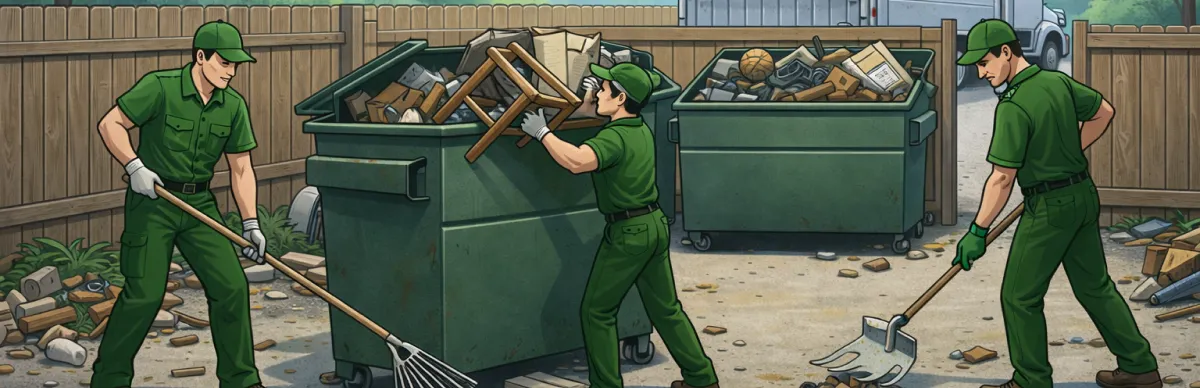
Professional Hoarding Cleanup Experts
Discreet and Compassionate Service
Thorough Property Sanitization
Fast and Reliable Response
Customized Cleanup Solutions
Safe Removal and Disposal
Coordinating Hoarding Cleanup with Fairburn's Code Enforcement and Public Works Departments
Hoarding cleanup in Fairburn requires coordination with multiple municipal departments to ensure compliance with local property maintenance codes and sanitation ordinances. The Fairburn Code Enforcement division investigates complaints related to excessive accumulation of materials, structural hazards, and unsanitary conditions on residential and commercial properties. Before initiating a hoarding cleanup, residents and property owners should understand the following requirements:
- Property maintenance violations may be issued for exterior accumulation visible from public rights-of-way
- Health and safety inspections may be triggered by neighbor complaints or emergency responder observations
- Compliance timelines are typically established by code enforcement officers, requiring documented remediation progress
- Waste removal coordination with the Fairburn Public Works Department is necessary for bulk material disposal exceeding standard residential collection limits
- Structural assessments may be required if hoarding conditions have compromised building integrity
Fairburn Code Enforcement
56 Malone Street, Fairburn, GA 30213
Phone: (770) 964-2244
Official Website: Fairburn Code Enforcement
Property owners receiving code violations should retain documentation of all cleanup activities, including hauler receipts and disposal manifests, to demonstrate compliance during follow-up inspections.
Biohazard and Hazardous Material Disposal Requirements for Fairburn Hoarding Cases
Hoarding environments frequently contain biohazardous materials and household hazardous waste that require specialized handling under Georgia and federal regulations. The Georgia Environmental Protection Division (GA EPD) oversees solid waste management standards that govern the separation, transport, and disposal of contaminated materials. Common hazardous items encountered during hoarding cleanups include:
- Biological waste such as animal waste, spoiled food, and bodily fluids requiring biohazard-rated containment and disposal
- Household chemicals including paints, solvents, pesticides, and cleaning agents prohibited from standard landfill disposal
- Expired medications that must be disposed through DEA-authorized collection programs or pharmacy takeback events
- Lead paint debris in pre-1978 homes, requiring compliance with the EPA Renovation, Repair, and Painting Rule
- Asbestos-containing materials in older Fairburn homes, which require licensed abatement contractors and cannot be disturbed without proper containment
Fulton County periodically hosts Household Hazardous Waste collection events where Fairburn residents can dispose of chemicals, batteries, fluorescent bulbs, and electronics at no charge. Workers handling biohazardous materials must use appropriate personal protective equipment including respirators, gloves, and disposable coveralls in accordance with OSHA bloodborne pathogen standards (29 CFR 1910.1030).
Georgia's Solid Waste Management Act and Recycling Mandates Affecting Hoarding Disposal
The Georgia Comprehensive Solid Waste Management Act (O.C.G.A. § 12-8-20) establishes statewide requirements for waste reduction, recycling, and proper disposal that directly impact hoarding cleanup operations in Fairburn. Georgia law requires all counties and municipalities to maintain solid waste management plans that include waste reduction goals. Key state-level regulations affecting hoarding cleanup include:
- Landfill disposal restrictions prohibit lead-acid batteries, used motor oil, and tires from entering municipal solid waste landfills
- Appliance disposal requires refrigerant recovery from air conditioners, refrigerators, and freezers per EPA Section 608 regulations before units can be scrapped or landfilled
- Electronics recycling is encouraged through Georgia's voluntary e-waste collection programs, though the state does not currently enforce a mandatory landfill ban on electronics
- Scrap metal and recyclable materials recovered during hoarding cleanups should be separated and directed to licensed recycling facilities to support Georgia's waste diversion objectives
Georgia Environmental Protection Division
2 Martin Luther King Jr. Drive SE, Suite 1456, Atlanta, GA 30334
Phone: (404) 656-4713
Official Website: Georgia Environmental Protection Division
Commercial haulers transporting hoarding debris from Fairburn properties must hold valid solid waste handling permits issued by GA EPD and maintain proper manifesting documentation for all loads delivered to permitted disposal facilities.
Building Permits and Property Restoration After Hoarding Cleanup in Fairburn
Severe hoarding conditions often result in structural damage, plumbing failures, mold growth, and pest infestations that require renovation or repair work following debris removal. The Fairburn Building Division administers building permits and construction inspections for all restoration activities that involve structural, electrical, plumbing, or mechanical modifications. Property owners should be aware of the following requirements:
- Building permits are required for any structural repairs, wall removal, electrical rewiring, or plumbing replacement discovered during or after hoarding cleanup
- Mold remediation in areas exceeding 10 square feet typically requires professional assessment and may trigger permit requirements depending on scope
- Pest control documentation should be obtained from licensed exterminators before and after cleanup to verify elimination of infestations
- Fire safety inspections through the Fairburn Fire Department may be necessary to verify that egress pathways, smoke detectors, and fire suppression systems are restored to code compliance
Fairburn Building Division
56 Malone Street, Fairburn, GA 30213
Phone: (770) 964-2244
Official Website: Fairburn Building Division
Properties subject to code enforcement action may require a certificate of compliance or re-inspection before the case is formally closed. Retaining all contractor licenses, permit numbers, and inspection reports is essential for demonstrating full remediation.
Donation, Recycling, and Material Recovery Options During Fairburn Hoarding Cleanups
Not all items recovered during a hoarding cleanup require disposal. Responsible material sorting can divert significant volumes from landfills while supporting community reuse programs in the Fairburn area. Cleanup teams should implement systematic sorting protocols to separate salvageable items from waste. Recommended diversion strategies include:
- Furniture and household goods in usable condition can be donated to organizations such as Habitat for Humanity ReStore or Goodwill locations serving South Fulton County
- Clothing and textiles should be bagged separately for donation or textile recycling; contaminated textiles must be disposed as solid waste
- Scrap metal including appliance frames, shelving, and hardware can be directed to licensed scrap yards for recycling and material recovery
- Paper, cardboard, and plastics should be separated according to Fulton County recycling guidelines and delivered to designated recycling drop-off locations
- Electronics including televisions, computers, and peripherals should be directed to certified e-waste recyclers to prevent improper landfill disposal
The Fairburn Public Works Department can provide guidance on current bulk waste collection schedules and accepted materials for curbside pickup. Documenting all donations with itemized receipts supports both regulatory compliance and potential tax deduction eligibility for property owners.
What Neighborhoods Do We Serve Throughout Fairburn, GA?
- Downtown Fairburn Historic District: Older commercial and residential structures may contain lead paint and asbestos-containing materials requiring specialized handling during hoarding cleanup. Narrow lot configurations and on-street parking can limit truck access for debris removal operations.
- Camp Creek Marketplace Area: Mixed commercial and residential properties in this corridor may involve lease compliance requirements and coordination with property management companies. Higher-density development requires careful scheduling to minimize disruption to neighboring businesses and residents.
- Duncan Memorial Park Vicinity: Established single-family homes in this area often feature smaller floor plans and limited exterior staging space for sorted materials. Proximity to public park areas requires attention to debris containment to prevent stormwater contamination.
- Bohannon Road Corridor: Newer suburban subdivisions with HOA governance may impose restrictions on exterior debris staging, visible waste containers, and cleanup vehicle parking duration. Advance HOA notification is recommended before commencing multi-day hoarding cleanup projects.
- Campbellton-Fairburn Road Area: Properties along this corridor include a mix of older single-family homes and multi-family units. Aging infrastructure in some buildings may require structural assessment before heavy debris removal to ensure floor load safety.
- Oakley Industrial District: Commercial and light industrial properties in this zone may involve larger-scale hoarding situations with warehouse-quantity accumulations. Commercial waste hauler licensing and manifesting requirements apply to all debris removed from commercially zoned properties.